
Foreign currency loans raised by Indian companies nosedived to $210 million in the September quarter (Q2), 93.3 per cent less than the year-ago period when five firms raised $3.1 billion. The Q2 amount is the lowest since December 2003 quarter when India Inc raised $191 million. Companies cited volatility in the currency markets, sharp rise in interest rates in the United States, and fund availability in India as the main reasons behind the sharp fall.
Top losers are Sun Pharma, Bajaj Auto, L&T, ITC, Hero Moto.
This is the ninth consecutive month that the manufacturing PMI remained above the 50-point-mark.

India's manufacturing sector activities lost further growth momentum and fell to a seven-month low in March as demand was constrained by the escalation of the COVID-19 pandemic, a monthly survey said on Monday. The seasonally adjusted IHS Markit India Manufacturing Purchasing Managers' Index (PMI) fell from 57.5 in February to a seven-month low of 55.4 in March. However, the latest reading was indicative of a substantial improvement in the health of the sector that outpaced the long-run series average, it said. In PMI parlance, a print above 50 means expansion while a score below 50 denotes contraction.

New business received by Indian manufacturers expanded at the fastest pace since February.

Reflecting a loss of "growth momentum", manufacturing activities in the country slowed down to a six-month low in March amid softer increases in new orders, production and employment, according to a survey.

India's manufacturing sector activities eased slightly in February but firms were upbeat as they responded to increased new work intakes by stepping up production and purchasing activities, a monthly survey said on Monday. The seasonally-adjusted IHS Markit India Manufacturing Purchasing Managers' Index (PMI) fell marginally to 57.5 in February from 57.7 in January, indicating that even though the pace of growth eased from January it remained sharp in the context of historical data. The headline figure for February remained above its long-run average of 53.6, the survey noted. In PMI parlance, a print above 50 means expansion while a score below 50 denotes contraction.

Firms hired additional hands to keep up with the production demand

India's services sector activities eased in March as growth was hit by the detrimental impact of the coronavirus pandemic and input costs remained elevated, a monthly survey said on Wednesday. The seasonally-adjusted India Services Business Activity Index fell from 55.3 in February to 54.6 in March. Though the rates of expansion softened, it indicated growth for the sixth consecutive month. In PMI parlance, a print above 50 means expansion while a score below 50 denotes contraction.
The headline seasonally adjusted IHS Markit India Manufacturing Purchasing Managers' Index (PMI) fell to 27.4 in April, from 51.8 in March, reflecting the sharpest deterioration in business conditions across the sector since data collection began over 15 years ago. The index slipped into contraction mode, after remaining in the growth territory for 32 consecutive months. In PMI parlance, a print above 50 means expansion, while a score below that denotes contraction.
The IHS Markit India Services Business Activity Index improved from 52.7 in November to 53.3 in December, highlighting the second-strongest rate of increase in output in over a year, after July. However, the overall level of positive sentiment remained below its long-run average.

Firms seem to have adopted a wait-and-see approach on their plans until public policies become clearer upon the formation of a government.

This is the 14th consecutive month that the manufacturing PMI remained above the 50-point mark. In PMI parlance, a print above 50 means expansion, while a score below that denotes contraction.

IndusInd Bank was the top gainer in the Sensex pack, zooming over 12 per cent, followed by Bajaj Finance, Axis Bank, ICICI Bank, Tech Mahindra, Bajaj Finserv and Kotak Bank. On the other hand, ITC, NTPC, Titan, Reliance Industries and ONGC were the laggards.

The Nikkei India Manufacturing Purchasing Managers Index (PMI), fell from 52.1 in February to a five-month low of 51.0 in March, indicating the slowest improvement in operating conditions recorded by the survey since last October.
The headline seasonally adjusted Nikkei India Composite PMI Output Index, that maps both the manufacturing and services sectors, rose from 53.3 in June to 54.1 in July.

HSBC's services purchasing managers index, that maps the activity of around 400 firms, despite a 40 basis points dip, has kept above the 50 mark that signifies growth since November.

The Nikkei India Manufacturing Purchasing Managers' Index (PMI) stood at 47.9 in July, down from 50.9 in June, its lowest mark since February 2009, and highlighted the first deterioration in business conditions in 2017 so far.

According to Japanese financial services major Nomura, India's manufacturing PMI remained in the expansion zone but suggested some consolidation after the rapid ramp up of activity in December.
With factory production, activities across the private sector saw the biggest drop in over three years

The Nikkei India Services PMI posted above the critical 50.0 level, which separates growth from contraction, for the fourth month running in May.

Bolstered by improved domestic demand, India's services sector expanded for the fourth consecutive month in January as business activities quickened and rising business optimism is set to sustain the growth momentum, a monthly survey said on Wednesday. The seasonally-adjusted India Services Business Activity Index rose from 52.3 in December to 52.8 in January, pointing to a quicker expansion in output. The index was above the critical 50 mark that separates growth from contraction for the fourth month in a row during January.

The index went below the crucial 50 mark.

India's manufacturing PMI rose to 54.5 in December, 2014, while in the corresponding period a year ago it stood at 50.7, just above the crucial 50 mark which separates growth from contraction.
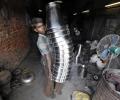
Factory growth picked up in May.
The Nikkei India Services Purchasing Managers' Index (PMI), which tracks services sector firms on a monthly basis, stood at 48.7 in January, as against 46.8 in December 2016.
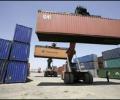
The index has remained above the 50-mark, below which it indicates contraction, for more than three years now.

The Nikkei Markit India Manufacturing Purchasing Managers' Index (PMI) -- an indicator of manufacturing activity -- declined from 52.5 in April to a three-month low of 51.6 in May.

The new orders sub-index, which includes domestic demand as well as orders from abroad, rose to 53.2 in May

The recovery in manufacturing is still likely to prove "protracted" given the lingering structural constraints.

Currency scarcity weighed on manufacturing performance where growth of new work flows slowed

Economic recovery in US, euro zone help; new orders sub-index at 52.4

The services sector had slipped into contraction in July as confusion caused by the GST rollout triggered a dip in new business orders.

India's services sector activity surged to a seven-year high in January driven by sharp increase in new business orders, leading to job creation and business optimism amid favourable market conditions, a monthly survey said on Wednesday. The IHS Markit India Services Business Activity Index rose from 53.3 in December to 55.5 in January, signalling the strongest upturn in output in seven years.

Service providers' confidence with regard to the 12-month outlook for business activity remained positive.

Sluggish rise in new business inflows and a cautious approach to costs reportedly led Indian manufacturers to shed jobs in September.

During March, the rate of inflation slowed to the weakest in four months and was below the long-run survey average
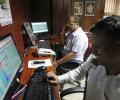
In the broader market, the S&P BSE Midcap and the S&P BSE Smallcap indices added 0.6% and 1.3%, respectively to touch their fresh lifetime highs.
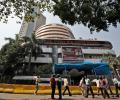
Sentiments turned somewhat weak towards the middle of the session as profit-booking emerged as investors turned cautious on disappointing quarterly earnings by some bluechip companies

The department for promotion of industry and internal trade has asked the telecom department and State-owned BSNL to put on hold the tender for setting up 4G network, valued at Rs 9,000 crore, after allegations emerged that the tender favoured foreign companies. The tender was floated by BSNL in March under the new management for setting up the 4G network.
